Traditional Serbian food is hearty, diverse and closely connected with family, hospitality and local traditions. Serbian cuisine developed at the crossroads of the Balkans and Central Europe, bringing together regional influences while creating a distinctive food culture of its own.
For travelers visiting Belgrade or exploring Serbia, food is one of the easiest ways to experience the country. Grilled meats, slow-cooked dishes, cheese-filled pastries, roasted peppers and traditional desserts appear everywhere from local bakeries to old-style kafanas.
If you are wondering what to eat in Serbia, these are some of the traditional Serbian dishes worth trying during your trip.
Traditional Serbian Food at a Glance
| Dish |
Type |
What to Expect |
| Ćevapi |
Grilled Meat |
Small seasoned minced-meat rolls |
| Pljeskavica |
Grilled Meat |
Large grilled meat patty |
| Sarma |
Main Dish |
Stuffed fermented cabbage leaves |
| Burek |
Pastry |
Flaky pastry with meat or cheese |
| Gibanica |
Pastry |
Rich cheese and filo pie |
| Ajvar |
Relish |
Roasted red pepper spread |
| Karađorđeva Šnicla |
Main Dish |
Breaded meat filled with kajmak |
Ćevapi – A Balkan Favorite on the Serbian Grill
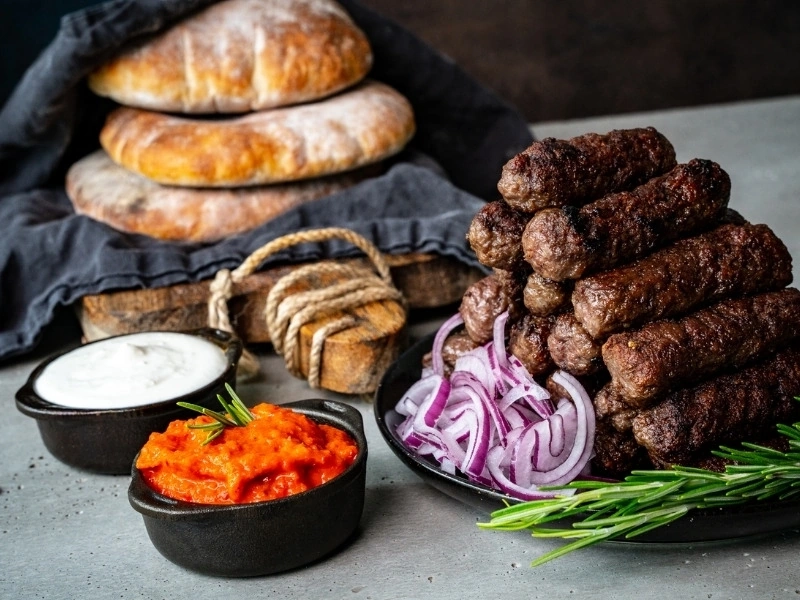
Ćevapi, also known as ćevapčići, are small rolls of seasoned minced meat cooked over a hot grill. Variations are found throughout the Balkans, but ćevapi are firmly established as part of Serbian grill culture.
In Serbia, they are commonly served with warm lepinja, chopped onions and sometimes kajmak. The combination is simple, filling and full of smoky flavor.
Ćevapi are served everywhere from casual grill restaurants to traditional kafanas, making them one of the easiest local foods to try during a trip to Belgrade.
Best for: Grilled food, quick lunches and first-time visitors
Pljeskavica – Serbia's Famous Grilled Meat Patty
Pljeskavica is a large seasoned minced-meat patty cooked on the grill. It is often described as the Serbian answer to a burger, although its preparation, seasoning and toppings give it a distinct Balkan character.
It can be served on a plate or inside lepinja and accompanied by onions, kajmak, ajvar or spicy urnebes. Different regions have their own styles, and southern Serbia is particularly famous for its grilled meat tradition.
For travelers looking for Serbian street food, pljeskavica is one of the most popular and widely available choices.
Best for: Street food and hearty meals
Sarma – A Serbian Winter Classic
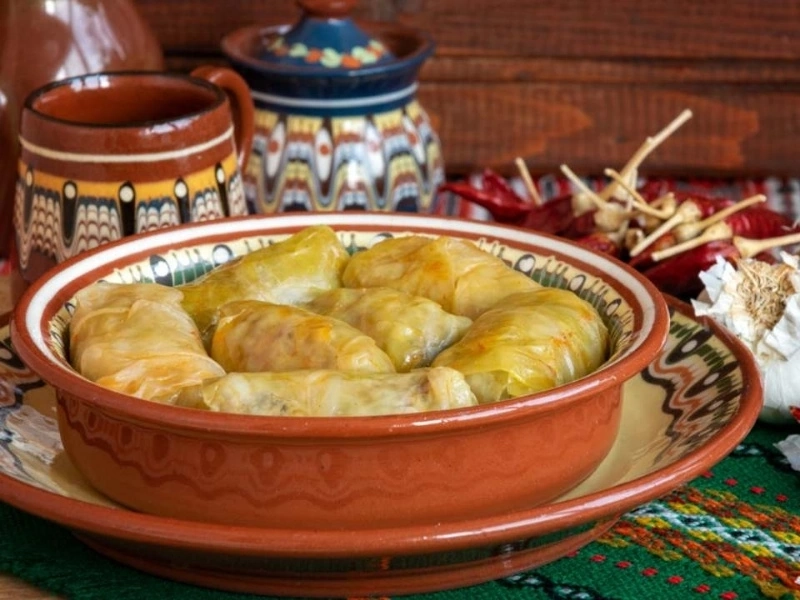
Sarma is one of the most comforting dishes associated with traditional Serbian home cooking. It is usually prepared by wrapping fermented cabbage leaves around a filling of minced meat, rice and seasonings.
The rolls are slowly cooked until the cabbage becomes tender and the flavors develop. Recipes vary between families, and many households have their own way of preparing the dish.
Sarma is especially common during winter, celebrations and family gatherings. It is the kind of dish that represents the slower, home-cooked side of Serbian cuisine.
Best for: Winter visits and traditional home-style food
Burek – A Classic Serbian Bakery Breakfast
Burek belongs to the wider Ottoman and Balkan culinary tradition and has become a staple of everyday food culture in Serbia.
Walk into a Serbian bakery in the morning and you are likely to find large trays of freshly baked burek ready to be sliced. Meat and cheese are among the most common fillings.
Burek is traditionally paired with yogurt and makes a filling breakfast or quick meal. It is inexpensive, widely available and one of the easiest ways to experience everyday Serbian food rather than restaurant dining.
Best for: Breakfast, bakeries and budget-friendly food
Gibanica – Traditional Serbian Cheese Pie
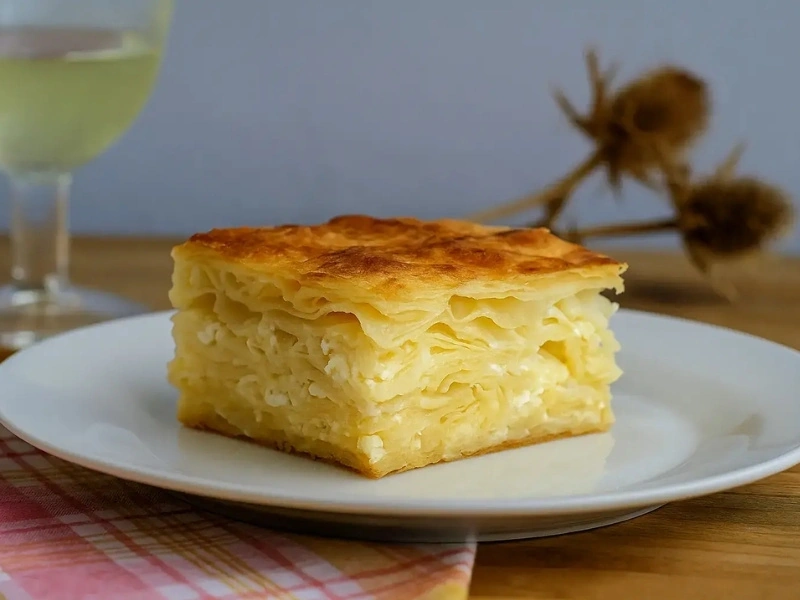
Gibanica is one of the best-known pastries in Serbian cuisine. It is prepared with thin sheets of dough and a rich filling typically made with white cheese and eggs.
Recipes differ from household to household. Some versions are carefully layered, while others have a looser, folded texture that creates a soft interior and crisp surface when baked.
Gibanica can appear at breakfast, family lunches, celebrations and festive tables. It is also one of the most accessible traditional choices for travelers who do not eat meat.
Best for: Breakfast, cheese lovers and vegetarian travelers
Ajvar – The Roasted Pepper Flavor of the Serbian Table
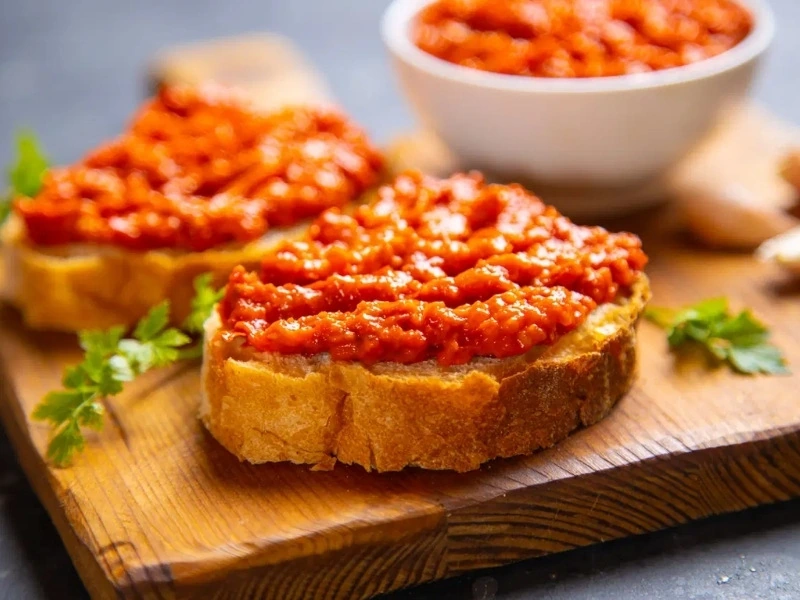
Ajvar is a roasted red pepper relish enjoyed across the Balkans and strongly associated with Serbian food culture. Traditional preparation often takes place in late summer and autumn, when red peppers are at their best.
The peppers are roasted, peeled and slowly cooked until they develop a thick texture and deep flavor. Depending on the recipe, ajvar can range from mild and slightly sweet to noticeably spicy.
It is commonly served with fresh bread, cheese, grilled meats and traditional appetizers.
Best for: Appetizers, grilled food and vegetarian dishes
Karađorđeva Šnicla – A Serbian Dish Born in Belgrade
Karađorđeva Šnicla has a much more recent and clearly documented story than many traditional dishes.
Serbian chef Milovan Mića Stojanović created the dish in Belgrade in 1956 when he needed to improvise after lacking the ingredients required for Chicken Kiev.
The original version used a thin beef schnitzel spread with kajmak, rolled, breaded and fried. Today, restaurants may also prepare versions using other meats, but the creamy kajmak filling remains its defining feature.
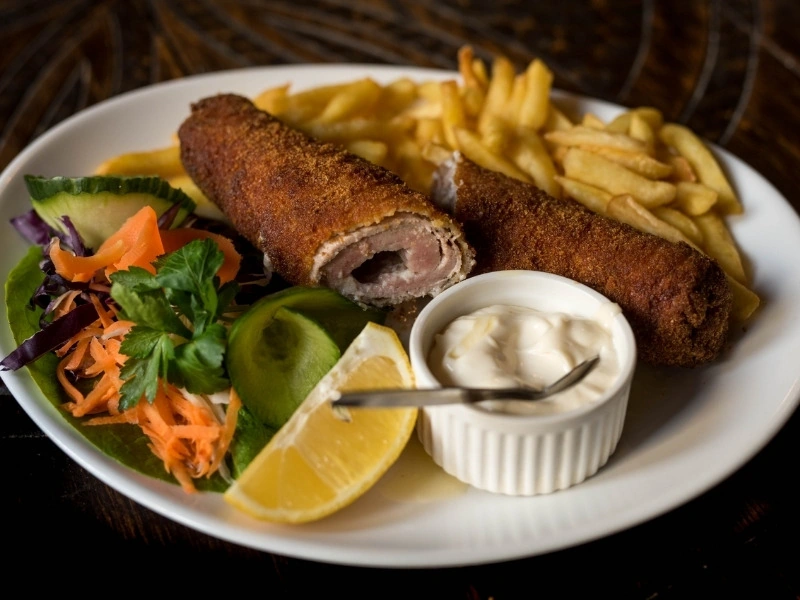
For visitors eating in a traditional Belgrade restaurant, Karađorđeva Šnicla is one of the most distinctly Serbian dishes to look for.
Best for: Restaurant meals and meat lovers
Prebranac – Serbian Baked Beans
Serbian cuisine may be famous for grilled meat, but there are also traditional dishes where vegetables and legumes take center stage.
Prebranac is a baked bean dish usually prepared with onions, paprika and seasonings. It can be served as a side dish or eaten as a meal on its own.
Meat-free versions are also associated with Orthodox fasting periods, making prebranac a useful traditional option for vegetarian visitors.
Best for: Comfort food and meat-free meals
Proja and Kajmak – Simple Flavors of Serbia
Some of Serbia's most memorable foods are also among the simplest. Proja is a traditional corn-based bread often served alongside cheese, cured meat and other appetizers.
Kajmak is a rich, creamy dairy product frequently eaten with warm bread or grilled meat. Fresh kajmak has a softer, milder taste, while aged versions can develop a stronger and saltier flavor.
Ajvar, kajmak, white cheese and proja often appear together as part of a Serbian-style appetizer.
Serbian Desserts – From Tulumbe to Orasnice
Serbian desserts reveal the same mix of cultural influences found in the country's savory cuisine.
Ottoman culinary heritage can be seen in syrup-soaked desserts such as baklava and tulumbe, while Central European influences appear in strudels and other pastries.
Other sweets worth trying include orasnice, traditional walnut cookies, and vanilice, small sandwich cookies often prepared for family celebrations and holidays.
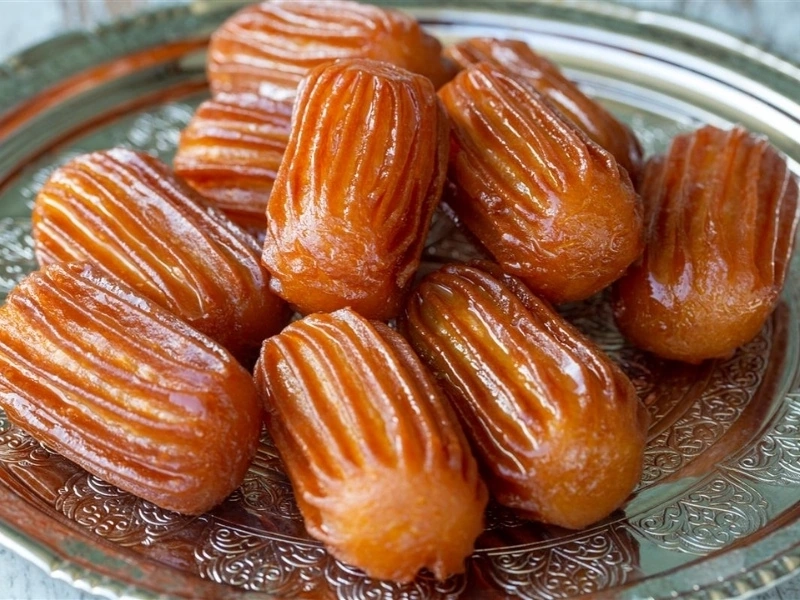
Desserts are often enjoyed with coffee and can be found in pastry shops, kafanas and traditional restaurants.
Where to Try Traditional Serbian Food in Belgrade
A traditional kafana is one of the best places to experience Serbian cuisine. These tavern-style restaurants commonly serve grilled meats, cooked dishes, salads, cheeses and local specialties in a relaxed setting.
Skadarlija is Belgrade's best-known district for traditional restaurants and is convenient for first-time visitors. However, local Serbian food is not limited to the tourist center.
Zemun and neighborhoods across Belgrade also have restaurants serving grilled meat, cooked dishes and regional specialties. For burek and other pastries, visit a local bakery in the morning rather than waiting for lunch or dinner.
What Should You Eat on Your First Day in Belgrade?
If you want to experience several Serbian flavors without ordering too much food, start with a traditional appetizer containing ajvar, kajmak, white cheese and bread.
Choose ćevapi or pljeskavica if you want grilled food. Karađorđeva Šnicla is a good choice for a richer restaurant meal, while sarma offers something closer to traditional home cooking.
For breakfast the next morning, try burek with yogurt. Finish one of your meals with orasnice, vanilice or tulumbe to experience the sweeter side of Serbian cuisine.
Is Serbian Food Vegetarian-Friendly?
Serbian cuisine is strongly associated with meat, but vegetarian travelers still have several traditional options.
Gibanica, ajvar, proja, cheese-based dishes and many fresh salads are usually suitable choices. Prebranac can also be meat-free, although recipes vary between restaurants.
If you follow a strict vegetarian diet, ask whether animal fat, meat stock or meat has been used in cooked dishes before ordering.
Why Serbian Food Is Worth Trying
Serbian cuisine combines the culinary traditions of different regions without losing its own character. Grilled meat from the south, pastries and dough-based dishes, roasted peppers, dairy products and slow-cooked family recipes all contribute to a varied food culture.
Food is also closely connected with Serbian hospitality. Meals are often meant to be shared and enjoyed slowly, especially in traditional restaurants and family settings.
Discover More of Belgrade
After trying traditional Serbian food, continue exploring the city. Check the museums, attractions, tours and experiences available with the
Belgrade E-pass and plan your Belgrade itinerary.
What Is the Most Famous Serbian Food?
There is no single dish that represents the whole of Serbian cuisine, but ćevapi, pljeskavica, sarma, gibanica and Karađorđeva Šnicla are among the foods visitors are most likely to encounter.
The best way to experience Serbian cuisine is to try different types of food: one grilled dish, one pastry, local ajvar or kajmak, a slow-cooked specialty and a traditional dessert. Together, they provide a much better introduction to Serbia's food culture than any single dish.