Belgrade is best known for its Serbian Orthodox heritage, but the city also has a significant Roman Catholic presence. Catholic churches in Belgrade reflect the capital's links with Central Europe, its multicultural history and the different communities that have shaped the city over time.
Several Roman Catholic churches remain active places of worship today. Some are important for their architecture, while others are closely connected with the history of the Belgrade Archdiocese. Together, they offer another perspective on the religious and cultural heritage of Serbia's capital.
Church of Christ the King
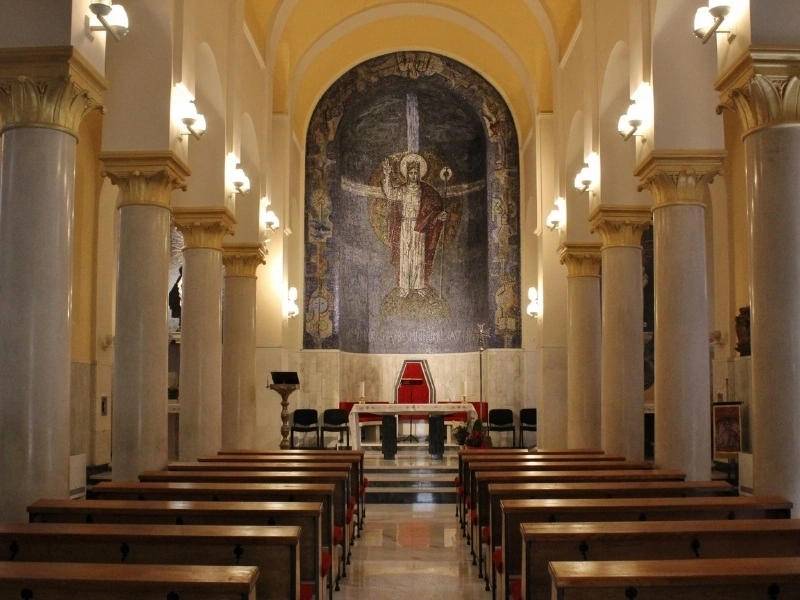
The Church of Christ the King is one of the most important Catholic churches in central Belgrade. Located on Krunska Street, it currently serves as a co-cathedral of the Roman Catholic Archdiocese of Belgrade.
The history of the site goes back to an earlier Catholic church dedicated to St. Ladislaus. The building was later reconstructed and enlarged during the early 20th century, developing into the Church of Christ the King known today.
For many years, the church served as the cathedral of the Belgrade Archdiocese before the Cathedral of the Assumption of the Blessed Virgin Mary became the main cathedral in 1988.
Its central location makes it easy to include in a sightseeing route. The Nikola Tesla Museum, Slavija Square and Tašmajdan Park are all nearby.
Best for: Catholic heritage and central sightseeing
Area: Krunska Street / Vračar
Church of St. Peter the Apostle
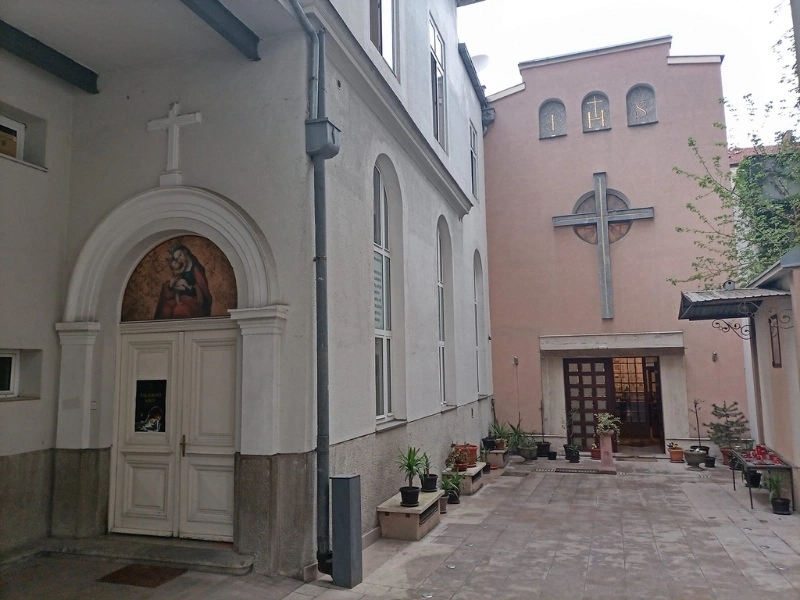
The Church of St. Peter the Apostle is located on Makedonska Street in central Belgrade. The present church was built in 1933 and designed by Croatian architect Juraj Denzler.
The church is associated with the Jesuit order and remains an active Roman Catholic parish. Unlike some of Belgrade's monumental religious buildings, St. Peter's has a relatively discreet appearance from the street.
Its location is one of its main advantages for visitors. Republic Square, Skadarlija and Terazije can all be reached easily on foot, making the church a convenient addition to an Old Town sightseeing route.
Services may also be held in different languages, including English, making the church particularly useful for international Catholic visitors. Mass schedules can change, so visitors should check current times before arriving.
Best for: Jesuit heritage and international visitors
Area: Makedonska Street
Church of St. Anthony of Padua
The Church of St. Anthony of Padua is one of the most architecturally distinctive Catholic churches in Belgrade.
Located on Bregalnička Street, the church was designed by renowned Slovenian architect Jože Plečnik. Construction took place between 1929 and 1932, while its prominent bell tower was completed later, in 1962.
The church stands out because of its unusual rounded form and tall tower. Plečnik's individual approach to sacred architecture gives the building a very different appearance from both Belgrade's Orthodox churches and its more traditional Catholic churches.
Even travelers who are not specifically interested in religious history may find St. Anthony's Church worth seeing for its architecture alone.
Best for: Architecture and Jože Plečnik's work
Area: Zvezdara / Crveni Krst
Cathedral of the Assumption of the Blessed Virgin Mary
The Cathedral of the Assumption of the Blessed Virgin Mary is the main cathedral of the Roman Catholic Archdiocese of Belgrade.
Located on Hadži Milentijeva Street in Vračar, the cathedral represents a more modern chapter in Belgrade's Catholic history. Construction plans developed during the 20th century but were interrupted by World War II and later political changes.
The cathedral was eventually completed and consecrated in 1988, when it became the principal cathedral of the Belgrade Archdiocese.
Music is also an important part of the cathedral's identity. A large organ was installed in 2000, and the church has hosted organ concerts and other sacred and classical music events.
Its modern appearance provides an interesting contrast with the older Church of Christ the King, making the two churches worth comparing during a visit to Vračar.
Best for: Catholic religious life, organ music and modern sacred architecture
Area: Vračar
Franciscan Church and Monastery in Zemun
Catholic heritage in Belgrade is not limited to the central districts. Zemun also has an important Roman Catholic tradition.
The Franciscan Church and Monastery is located in the historic part of Zemun. The Franciscan presence here has a long history, and the complex has undergone several reconstructions over the centuries.
After a major fire in the late 18th century, the church and monastery were rebuilt during the 19th century, helping establish much of the appearance seen today.
Its location makes it easy to combine with other attractions in Zemun. Gardoš, the old town streets and Zemun Quay are all nearby.
For visitors interested in both religious heritage and historic neighborhoods, the Franciscan Church fits naturally into a half-day Zemun itinerary.
Best for: Zemun history and Franciscan heritage
Area: Zemun
Church of St. Cyril and St. Methodius
The Church of St. Cyril and St. Methodius is another active Roman Catholic church in Belgrade. Located on Požeška Street in Banovo Brdo, it serves the local Catholic community and continues to host regular religious services.
The church has also been connected with organ and chamber music programs, highlighting the wider cultural role that Catholic churches can play beyond regular religious services.
For most first-time visitors, it is less central than Christ the King or St. Peter's Church. However, it can be worth visiting for travelers exploring Banovo Brdo or those with a particular interest in Belgrade's Catholic community.
Best for: Local Catholic life and religious music
Area: Banovo Brdo
Which Catholic Churches Should You Visit First?
If you have limited time in Belgrade, start with the Church of Christ the King and the Church of St. Peter the Apostle. Both are relatively easy to combine with sightseeing in central Belgrade.
Architecture lovers should make time for the Church of St. Anthony of Padua. Its Jože Plečnik design makes it one of the most distinctive religious buildings in the city.
Visitors particularly interested in the Roman Catholic Church in Serbia should also include the Cathedral of the Assumption of the Blessed Virgin Mary, while the Franciscan Church is the best choice to combine with a day in Zemun.
Catholic Heritage in Belgrade
Belgrade's Catholic churches are fewer in number than its Serbian Orthodox churches, but they remain an important part of the city's religious and cultural landscape.
The city's location between Central Europe and the Balkans has influenced its religious history for centuries. Political changes, migration and shifting borders brought different communities and traditions into Belgrade at different times.
Today, active Catholic parishes can be found in central Belgrade, Vračar, Zemun, Banovo Brdo and other parts of the capital.
Together, these churches show that Belgrade's religious history cannot be understood through a single tradition alone.
How to Visit Catholic Churches in Belgrade
Most Catholic churches in Belgrade are active places of worship rather than conventional tourist attractions.
Visitors should dress respectfully, speak quietly and avoid walking around the church during Mass. If a service is taking place, religious activities should always take priority over sightseeing.
Photography policies can vary from church to church. Exterior photography is generally straightforward, but visitors should check signs or ask permission before photographing interiors, clergy or worshippers.
Opening access and Mass schedules may also change during religious holidays, special ceremonies and parish events. If seeing the interior of a particular church is important to your visit, check the current schedule before going.
Plan a Catholic Church Route in Belgrade
A convenient route through central Belgrade can begin at St. Peter's Church on Makedonska Street. From there, continue toward the Church of Christ the King on Krunska Street.
You can then explore Vračar and continue toward the Cathedral of the Assumption of the Blessed Virgin Mary.
The Church of St. Anthony of Padua is farther east and works better as a separate architectural stop. For another day, combine the Franciscan Church with Gardoš and the Danube waterfront in Zemun.
Discover More of Belgrade
Combine Belgrade's religious landmarks with museums, historic sites and local experiences. Check the attractions and activities available with the
Belgrade E-pass and plan your sightseeing route before your visit.
What Is the Main Catholic Church in Belgrade?
The Cathedral of the Assumption of the Blessed Virgin Mary is the main cathedral of the Roman Catholic Archdiocese of Belgrade.
The Church of Christ the King serves as a co-cathedral and remains another major center of Catholic life in the city. For visitors interested in religious architecture and history, seeing both churches provides a useful introduction to the Catholic heritage of Serbia's capital.