Belgrade's Orthodox churches are among the city's most important cultural and historical landmarks. From churches inside Belgrade Fortress to the monumental Temple of Saint Sava, these sacred places reflect different periods of Serbian history, architecture and religious life.
If you are interested in Orthodox churches in Belgrade, several can easily be included in a sightseeing itinerary through the city center, Dorćol, Vračar and Zemun. Below are some of the most important churches to see and what makes each one worth visiting.
See Saint Sava With a Guide
Learn the story behind Belgrade’s most famous Orthodox landmark with a guided church and crypt visit.
View St. Sava Tour →
Ružica Church – A Historic Church Inside Belgrade Fortress
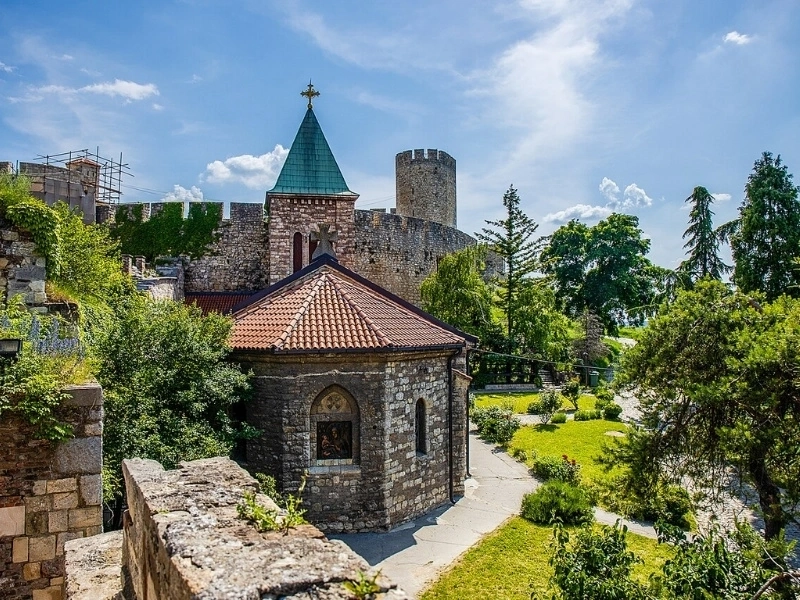
Ružica Church is located inside Belgrade Fortress, below Zindan Gate. A church dedicated to the same name existed here during the time of Despot Stefan Lazarević, but it was destroyed after the Ottoman conquest of Belgrade in 1521.
The present building had previously served as an 18th-century gunpowder warehouse before being converted into a military church in the 19th century. After suffering major damage during World War I, it was restored in the 1920s.
One of the most distinctive details inside Ružica Church is its connection with Serbian military history. Decorative elements, including unusual chandeliers associated with military materials, give the interior a character unlike most other Orthodox churches in Belgrade.
Best for: History, unusual interiors and a Kalemegdan sightseeing route
Cathedral Church of Saint Michael the Archangel
The Cathedral Church of Saint Michael the Archangel, often called Belgrade Cathedral or Saborna Crkva, is one of the most important Serbian Orthodox churches in the capital. The present church was built between 1837 and 1840 during the reign of Prince Miloš Obrenović.
Its architecture combines Classical design with Late Baroque elements, while the interior is known for its gilded iconostasis and 19th-century religious art. The church also contains important relics and tombs connected with Serbian religious and royal history.
Two major figures of Serbian culture, Vuk Stefanović Karadžić and Dositej Obradović, are buried in front of the church's main entrance. The nearby Patriarchate and Princess Ljubica's Residence make this area especially valuable for visitors interested in Belgrade's history.
Best for: Serbian history, religious art and Old Town sightseeing
Church of St. Alexander Nevsky
Located in Dorćol, the Church of St. Alexander Nevsky has a history connected with both Serbia and Russia. An earlier church dedicated to the saint was built in the area in the 19th century, while construction of the present church was delayed by World War I and completed in 1928–1929.
The church features Serbian-Byzantine architectural influences and a marble iconostasis donated during the reign of King Alexander I Karađorđević. Inside are also memorials connected with soldiers who died in Serbia's liberation wars and monuments associated with Serbian-Russian historical ties.
Its Dorćol location makes it easy to combine with a walk through one of Belgrade's oldest and most atmospheric neighborhoods.
Best for: Architecture, Serbian-Russian history and a Dorćol walking route
St. Mark's Church – A Landmark of Tašmajdan Park
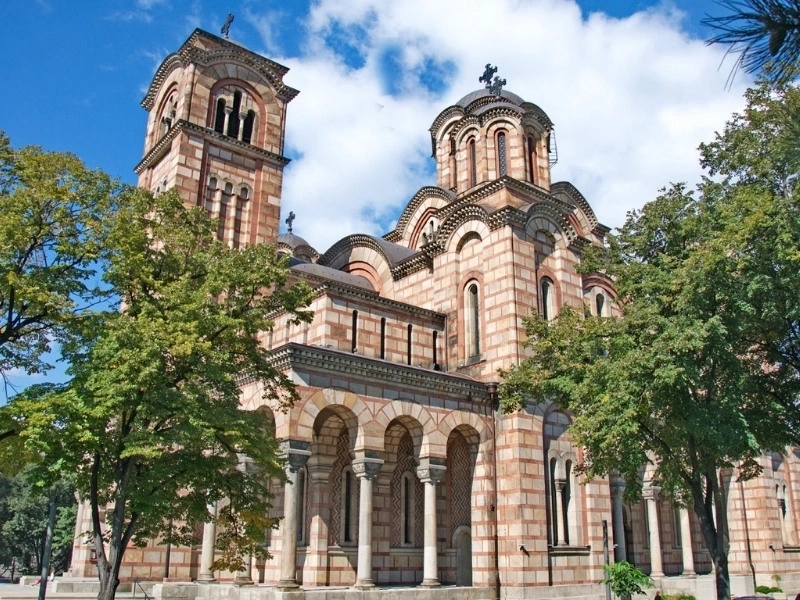
St. Mark's Church is one of the most recognizable Orthodox churches in central Belgrade. It was built between 1931 and 1940 on the site of an older church and was designed in the Serbian-Byzantine style.
Its appearance was strongly influenced by the medieval Gračanica Monastery, particularly in its overall form and decorative façades. Inside the church is a sarcophagus containing the remains of Emperor Stefan Dušan, one of the most significant rulers in medieval Serbian history.
The church stands beside Tašmajdan Park, so it is easy to visit while walking between central Belgrade and the Vračar district.
Best for: Monumental architecture, medieval Serbian history and photography
Ascension Church – A 19th-Century Church in Central Belgrade
The Ascension Church, or Vaznesenjska Crkva, was built in 1863 following an initiative by Prince Mihailo Obrenović and Metropolitan Mihajlo. Its design reflects the Romantic architectural style of the period while drawing inspiration from medieval Serbian monasteries.
The interior contains 19th-century religious art, later wall paintings and a treasury with icons, books and other historic objects. Although less monumental than Saint Sava or St. Mark's Church, it is an important stop for visitors interested in the development of Serbian church architecture during the 19th century.
Its central location also makes it easy to include in a wider sightseeing walk through downtown Belgrade.
Best for: 19th-century architecture, religious heritage and central sightseeing
Temple of Saint Sava – Belgrade's Most Famous Orthodox Landmark
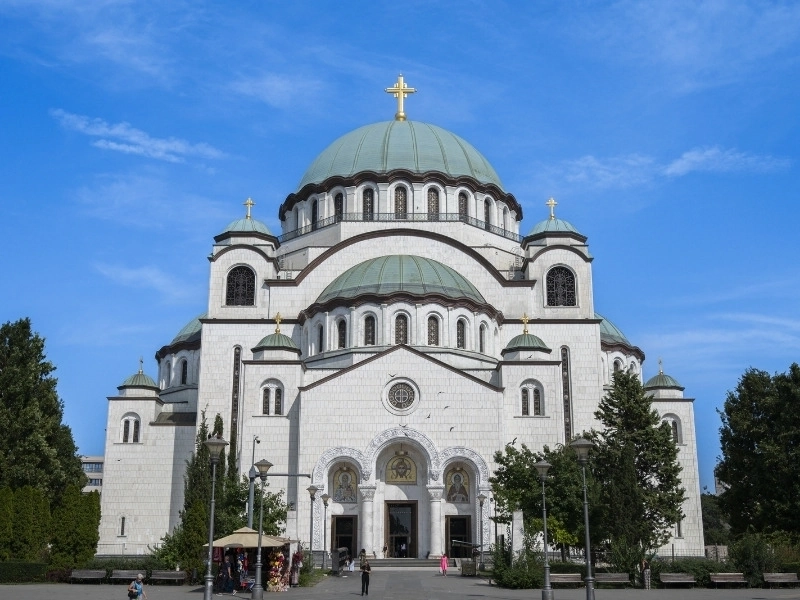
The Temple of Saint Sava is one of Belgrade's defining landmarks and one of the largest Orthodox churches in the world. Standing on Vračar Plateau, its enormous dome and white exterior can be seen from many parts of the city.
The temple is associated with Saint Sava, the first archbishop of the autocephalous Serbian Church. According to historical tradition, the Ottoman authorities burned his relics on Vračar in 1594. Plans for a memorial church developed centuries later, with construction beginning in the 20th century and continuing through several periods of interruption.
Today, visitors are especially drawn to the vast interior, monumental mosaics and richly decorated crypt. Even travelers with limited time in Belgrade usually include Saint Sava because of its scale, architecture and importance to Serbian religious identity.
Best for: First-time visitors, monumental architecture and mosaics
Church of St. Nicholas in Zemun
Visitors exploring Zemun can also stop at the Church of St. Nicholas, located below the historic Gardoš area. Built in the 18th century, it is one of the older Orthodox churches in the wider Belgrade area.
The church is known for its Baroque character, carved iconostasis and collection of historic religious objects. Its location makes it easy to combine with Gardoš Tower, the old streets of Zemun and the Danube riverfront.
Best for: Zemun sightseeing, Baroque architecture and historic interiors
Chapel of St. Petka at Kalemegdan
Close to Ružica Church is the Chapel of St. Petka, another important Orthodox site within the Belgrade Fortress area. The present chapel dates from the 20th century and stands near a spring traditionally associated with Saint Petka.
Its interior is decorated with mosaics, and the chapel remains an active place of worship. Since it is only a short walk from Ružica Church, both can easily be visited during the same trip to Kalemegdan.
Best for: Pilgrimage, mosaics and a Belgrade Fortress visit
Which Orthodox Churches Should You Visit First?
If you are visiting Belgrade for the first time, start with the Temple of Saint Sava, St. Mark's Church and the Cathedral Church of Saint Michael the Archangel. Together they represent different periods of Serbian religious architecture and are located close to other major attractions.
For a more historic atmosphere, combine Ružica Church and the Chapel of St. Petka with Belgrade Fortress. Travelers spending time in Dorćol can add St. Alexander Nevsky Church, while the Church of St. Nicholas fits naturally into a day in Zemun.
Visiting Orthodox Churches in Belgrade
Most of these churches are active places of worship rather than museums. Visitors should dress respectfully, keep noise to a minimum and avoid interrupting services or private prayer.
Photography rules can vary by church and may be stricter during religious services. Look for signs or ask before photographing interiors. Opening access can also change for liturgies, religious holidays and special ceremonies, so check locally if a particular church is essential to your itinerary.
Plan an Orthodox Church Route in Belgrade
Several churches can be combined into a practical city route. In the historic center, visit the Cathedral Church before walking toward Belgrade Fortress for Ružica Church and the Chapel of St. Petka. St. Alexander Nevsky can be added while exploring Dorćol.
On another part of your route, St. Mark's Church and the Temple of Saint Sava can be paired with Tašmajdan Park, the Nikola Tesla Museum area and Vračar. Zemun is better treated as a separate half-day visit if you want to include the Church of St. Nicholas and Gardoš.
See More of Belgrade With One Pass
The Belgrade E-pass includes city attractions and selected guided experiences. See what’s included →
What Is the Most Famous Orthodox Church in Belgrade?
The Temple of Saint Sava is the most famous Orthodox landmark in Belgrade and one of the city's most recognizable buildings. However, visitors interested in Serbian religious history should also make time for the Cathedral Church, St. Mark's Church and the smaller historic churches around Kalemegdan.